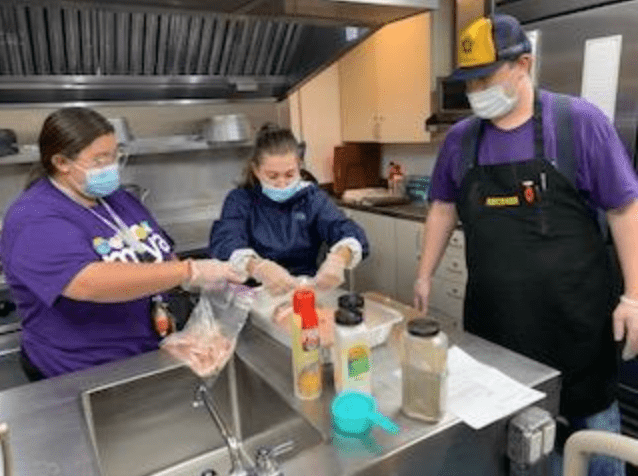
Roy Maas Youth Alternatives has served more than 85,000 young people and their families in its 45 years of existence. But the last year and a half has presented unique challenges for the nonprofit, which received a 2018 High Impact Grant to update and enlarge their kitchen.
RMYA, which provides counseling and short- and long-term housing for abused and trafficked youths ages 5-24, faced major challenges when Covid spread to the San Antonio area in the spring of 2020. Staff members started quickly to adjust their procedures to keep their staff and residents safe.
“We actually started making adjustments before it was called a pandemic,” said Gail Ribalta, chief development and administrative officer for RMYA. “In February 2020, we started bringing in a lot of PPE (personal protection equipment) and supplies. We started to limit outside people from coming onto our campus. We stopped regular volunteer activities but continued some of them socially distanced because the kids knew the volunteers so well.”
There have been eight young people confirmed with Covid over the past year and a half, she said, and they were cared for in a quarantined area of the campus. Staff members still observe strict hygiene protocols through social distancing, cleaning and sanitizing, she noted.
Keeping people safe from the virus hasn’t been the only concern during the pandemic, Ribalta said, because the staff shortages that have affected other businesses also impacted RMYA.
“Normally, we serve about 150 young people at a time, but we are at about 80 percent of that capacity now due to staff shortages,” she said. “We’ve had trouble getting staff, and there is a licensing requirement with a very strict ratio of staff to children.”
Complicating the situation was the fact that some other social service agencies shut down during the pandemic, so RMYA took in many of those children as well, she said.
The staff started gradually opening the campus to outside people in June, but Covid monitoring continues and activities are still socially distanced, Ribalta said.
RMYA offers two types of residential care.
Emergency care is for those who have been removed from their home or other living arrangement for their own safety. Those stays used to be about a week, but now the average is 21 days, after which a caseworker determines where they go next, Ribalta said.
Long term residential care, on the other hand, has seen stays growing shorter, from nine months to a year before the pandemic to five or six months now, she said. A number of those young people have been adopted, and Child Protective Services is authorizing more kinship placements, where the child goes to a family member such as a grandparent once they’ve been checked out by social workers.
Through these tough times, the Impact San Antonio Teaching Kitchen, funded by a $100,000 High Impact Grant in 2018, has been a “godsend” for the agency, Ribalta said.
“The grant from Impact San Antonio has been a tremendous help. The kitchen serves more than 1,000 kids each year with nutritious food,” she said. “During Covid, with the new kitchen we have much better space utilization, new appliances and a broader menu. We offer nutrition and cooking programs for the older children. Many of our children have never seen anything cooked before.
“The kitchen is the heart of the home, and having nutritious food on a regular basis is one of the first steps in putting the children on the road to a successful life.”
Impact SA member Judy Gilby, who served as a liaison to RMYA for the 2018 grant, shared the excitement at the dedication of the kitchen in summer 2019.
“The kids were very proud of the meal served to us that day,” she said. “It was fortunate that the kitchen was available before COVID-19.”